Go to Cart
Case-Study-Scan2Screen_hero1

Case study: Scan2Screen - multispectral digitization of historical color film

Scan2Screen uses a high-resolution monochrome XIMEA camera to recover the authentic colors of century-old films, one spectral band at a time.

Seeing color the way film actually recorded it

A hundred-year-old film reel holds a question that turns out to be surprisingly hard to answer: what colors did it actually show? Historical color films are among the most fragile and most misunderstood objects in audiovisual heritage. Tinted and toned nitrate prints, two- and three-color processes, hand- and stencil-colored frames and early chromogenic stocks each store color in a chemically and physically different way, and many of those dyes have since faded, shifted or stained.

Conventional scanners, like ordinary cameras, see the world through three broad color channels behind a red-green-blue filter. That is fine for everyday photography, but a poor match for archival film: three narrow channels cannot capture the many different dyes a single frame may contain, so the result is a limited interpretation of the original colors rather than a comprehensive measurement of them. For an archive trying to preserve what a film looked like decades ago, that difference is everything.

This is the problem Scan2Screen set out to solve - not by tweaking an existing scanner, but by rethinking what a scanner is and how it should measure color. At the center of their solution sits a high-resolution monochrome camera from XIMEA.

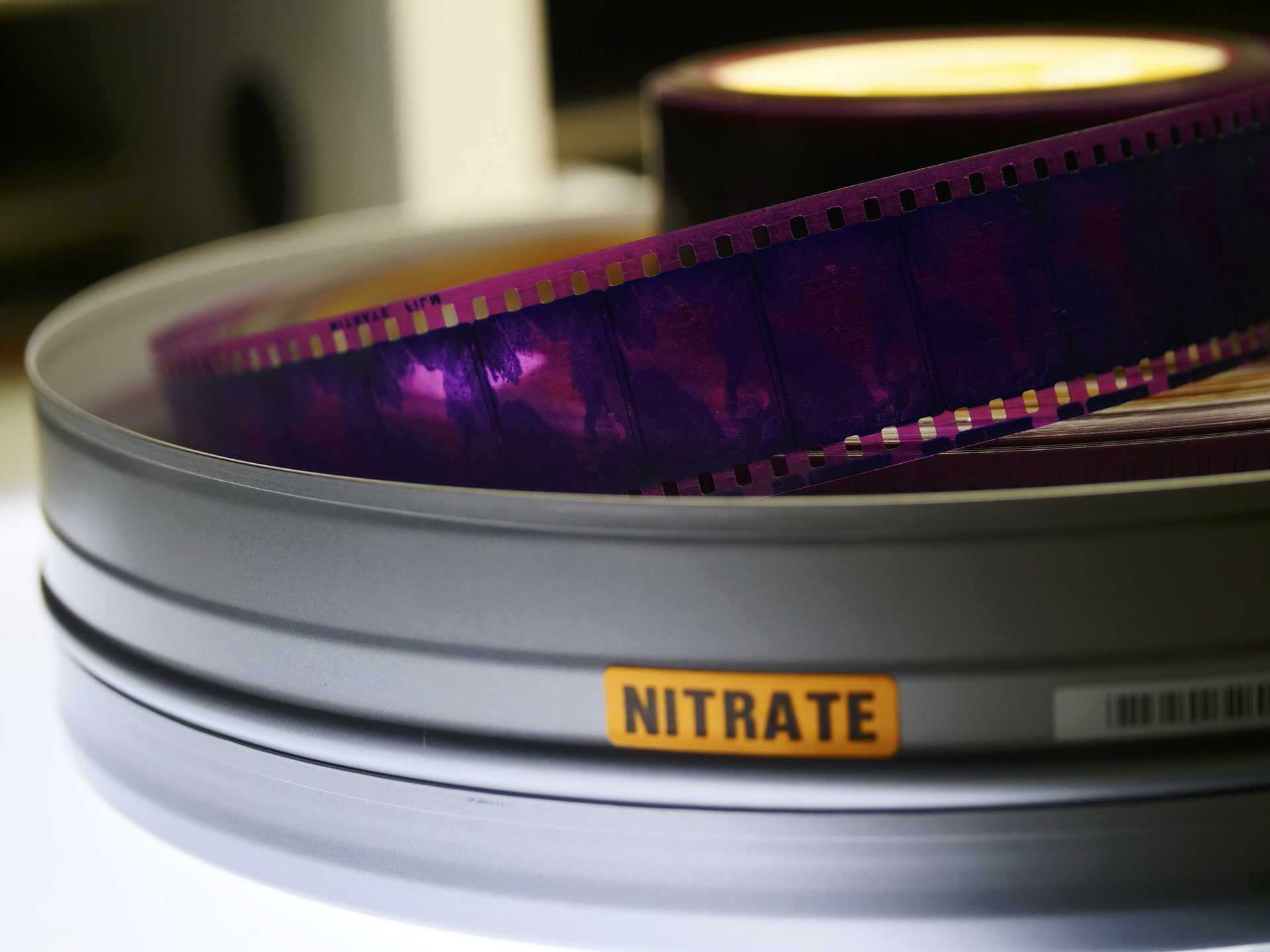
Nitrate print of The Soul of the Cypress (1920) on the Scan2Screen multispectral scanner
Nitrate print of THE SOUL OF THE CYPRESS (USA 1920, Dudley Murphy, scanned for the Color in Motion Exhibition. Courtesy of Library of Congress.

From research project to scanner in the field

Scan2Screen is a Swiss-American team - Scan2Screen Switzerland GmbH (Zurich) and Scan2Screen US LLC (Menlo Park, California), with an additional lab in Berlin - bringing film scholarship, imaging and color science, optics, hardware engineering and hands-on restoration under one roof. The company is young, but the work behind it is not: founded in 2023, it grew directly out of more than a decade of research into historical film colors and scanning technologies led by Dr. Barbara Flueckiger, founder of the Timeline of Historical Film Colors. That origin says a good deal about the team: the multispectral workflow is not a product they set out to sell but a tool they built because they cared about the films, and the people who published the underlying science now operate the scanner in archives around the world.
 

That research - recognized with awards from the CCAAA, the SMPTE and the Colour Group (GB) - underpins the bespoke multispectral scanner the team now operates. Their scans have reached international audiences, from the Color in Motion exhibition at the Academy Museum of Motion Pictures in Los Angeles to scanning at the Library of Congress, the George Eastman Museum, the BFI National Archive and many others.

Multispectral scanning: One frame, seven colors of light

The core idea is simple to state and demanding to engineer: instead of measuring three color channels, the multispectral Scan2Screen scanner captures a series of narrow spectral bands one after another. Where a normal camera asks "how much red, green and blue is here?", a multispectral system asks "how much light passes through this point of the film at each of a series of precisely defined wavelengths?" The answer is a much richer, more truthful description of the film, effectively a small spectrum measured at every pixel.

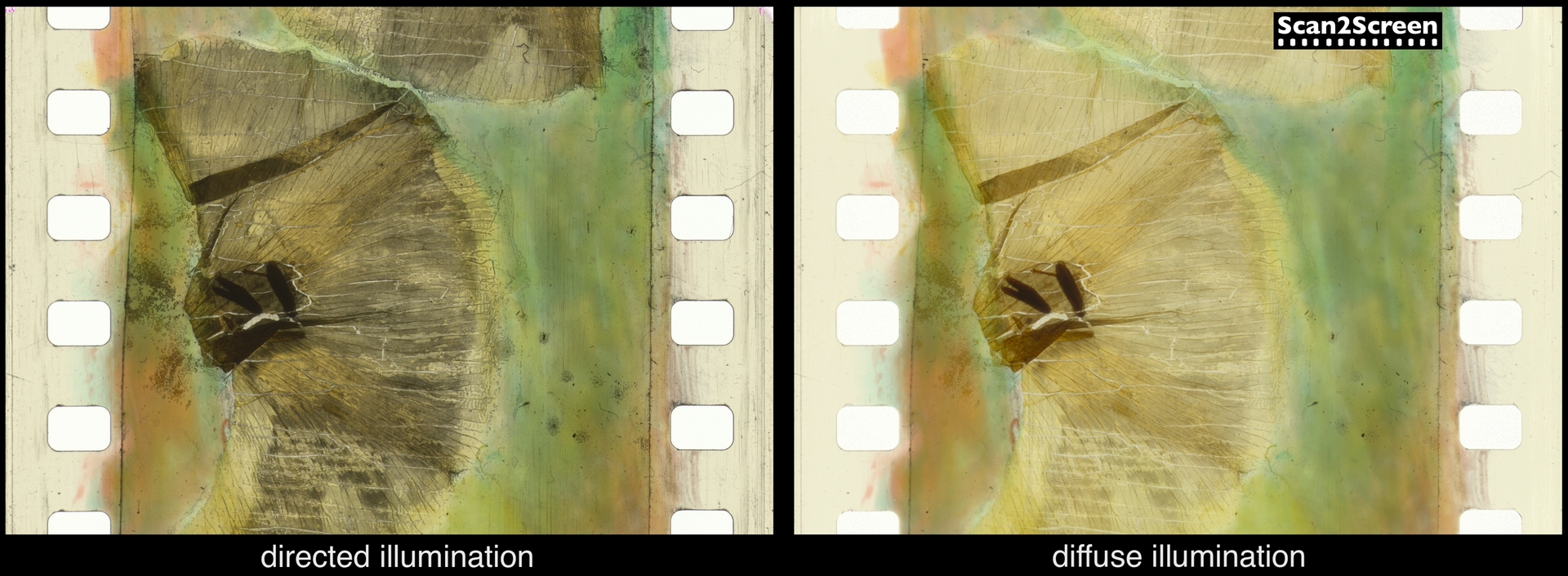
Hand-colored film Lukas' kleine Weltmaschine scanned under directed (left) and diffuse (right) illumination
Hand-colored, with insect wings and plant parts glued to the experimental film by Ursula Helfer, which was part of the installation LUKAS’ KLEINE WELTMASCHINE produced by Lulufilm, Germany 1993. Left: scanned in directed illumination, right: scanned in diffuse illumination.
 

The trick is to separate two jobs an ordinary camera fuses together: color comes from the light source, not from a filter on the sensor. The film is lit band by band by a set of light-emitting diodes (LEDs). In the current configuration each frame is captured in seven spectral bands - six spanning the full visible spectrum, plus an infrared channel. The camera records one monochrome image per band, and combining them yields a per-pixel spectral measurement of the frame. This workflow enables the science-backed rendering of a film’s appearance on the cinema screen with selected illuminants, from carbon arc to xenon light.
 

The infrared band does a second job. Because infrared light interacts with physical damage (scratches, dust and surface defects) largely independently of the film's dyes, the infrared image produces a map of the print's physical condition, separate from its color. That is invaluable both for documenting fragile material and for guiding restoration.
 

Several design consequences follow from this approach, and together they define what the camera at the heart of the system has to deliver:

  • The sensor must be monochrome. A conventional color sensor carries a Bayer color filter array - a microscopic red-green-blue mosaic bonded over the pixels. That mosaic is exactly what makes an everyday camera unsuitable for this kind of scientific work: in a multispectral system it is not just unnecessary, it is harmful. It would re-impose the very three-channel limitation the design is trying to escape, throw away two-thirds of the spatial resolution to interpolation, and tint each narrowband measurement with the filters' own response. A clean monochrome sensor sees exactly the light the LEDs send through the film, at full resolution, with no color-filter bias.

  • Resolution and bit depth must be high. Archival film carries fine grain, dust, scratches and physical texture that the scan has to record faithfully, and the subtle differences between dyes live in small tonal gradations. That calls for many pixels and for deep, linear tonal sampling, so that no details are lost in the process.

  • The light path must be controlled and well-characterized. Because color accuracy depends on knowing exactly which wavelengths reach the sensor, the illumination, optics and sensor response are treated as one calibrated optical system rather than as independent parts. Effects that quietly distort the measured colors, such as the chromatic Callier effect, where the film scatters different wavelengths differently, are understood and compensated rather than ignored.

The payoff is that the result is not a fixed "look" baked in at scan time. It is a spectral record from which color-accurate images can be derived and re-rendered as display standards evolve. And because that data is not tied to today's screens, a film captured once is effectively secured, with no need to put the delicate original back through a scanner every time technology moves on. For all the physics involved, the goal stays simple: an image whose link to the original film remains intact for the human eye, letting a viewer see what the film itself recorded.

Inside the instrument

The scanner is built around a principle that shapes almost every design decision: the whole system is compact enough, if need be, to be carried onto an airplane in a normal flight case. For archives holding material too fragile or too hazardous to ship, that portability is not a convenience; it is what makes the scan possible at all.

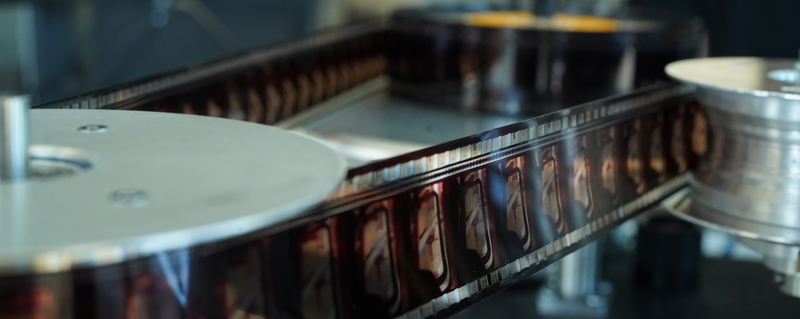
The illumination contains narrowband illuminations - six spread across the visible spectrum plus one in the infrared define the scanner's spectral characteristics. Scanning proceeds frame by frame: the film advances, comes to a complete stop, and is exposed once per band while stationary. Each band is in fact captured twice, once under direct and once under diffuse illumination, for a total of fourteen captures per frame. The two lighting geometries interact differently with the film's surface and scattering behavior, adding a further dimension of information beyond the spectral bands themselves.

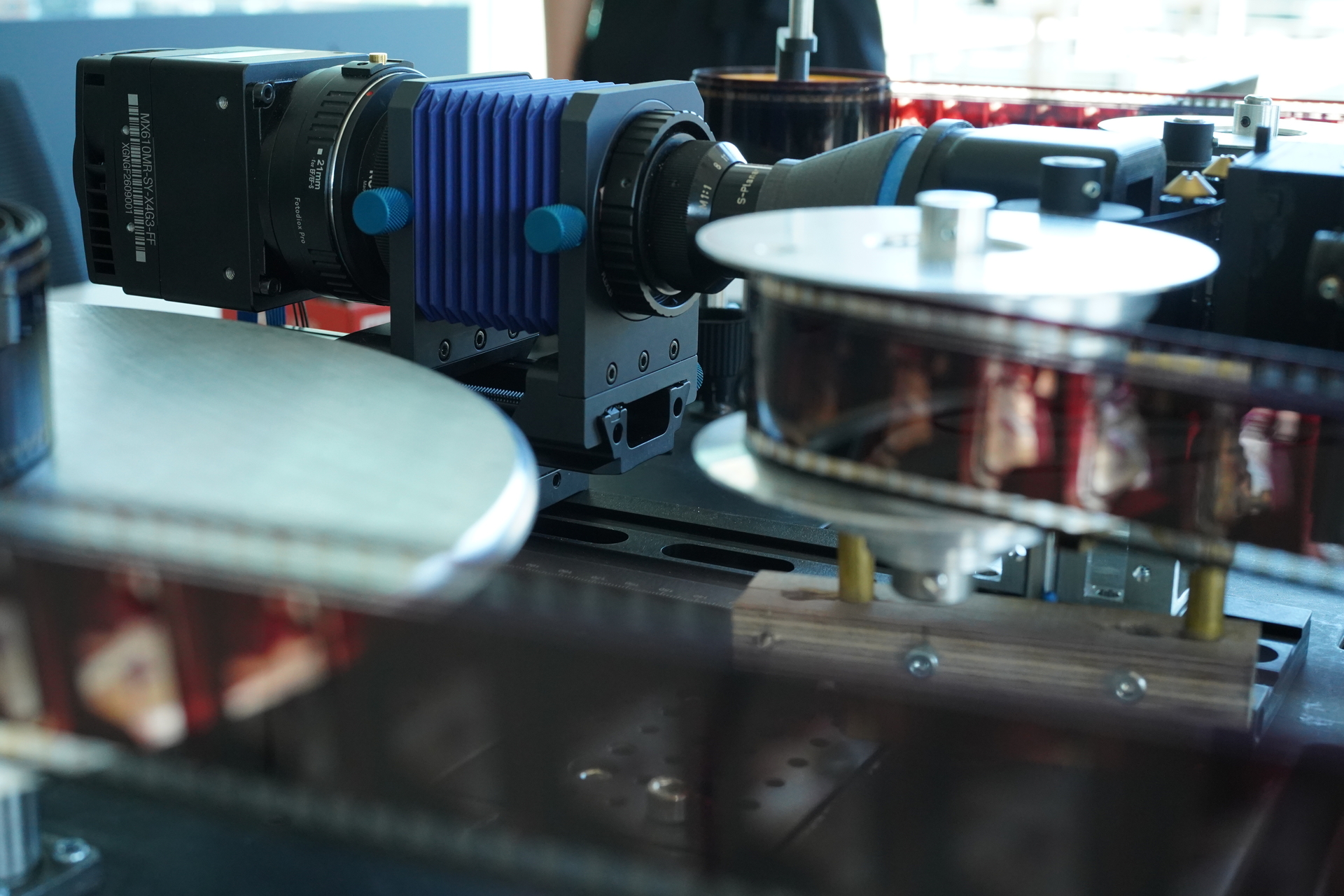
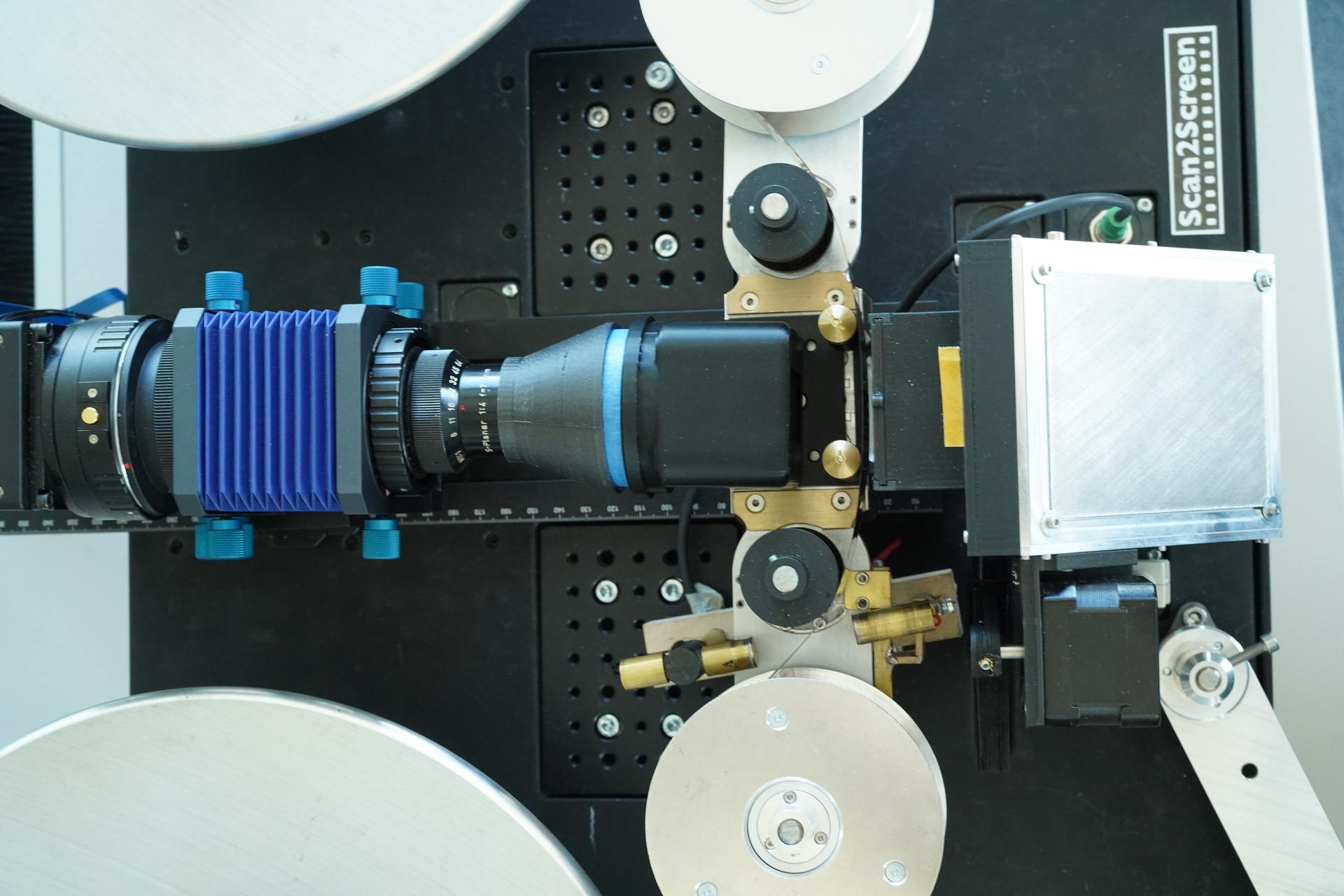
Scan2Screen scanner setup with LED illumination for seven spectral bands
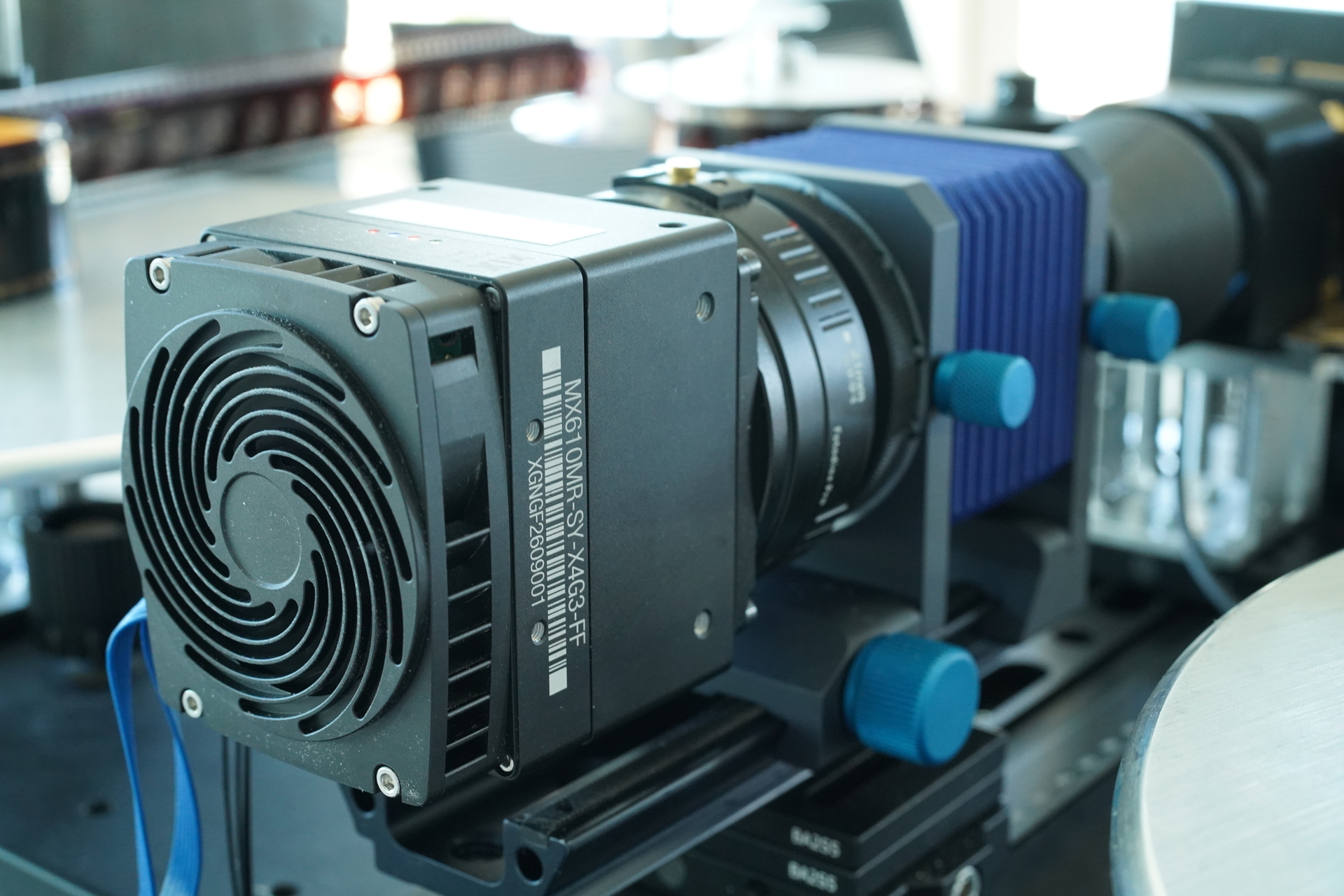
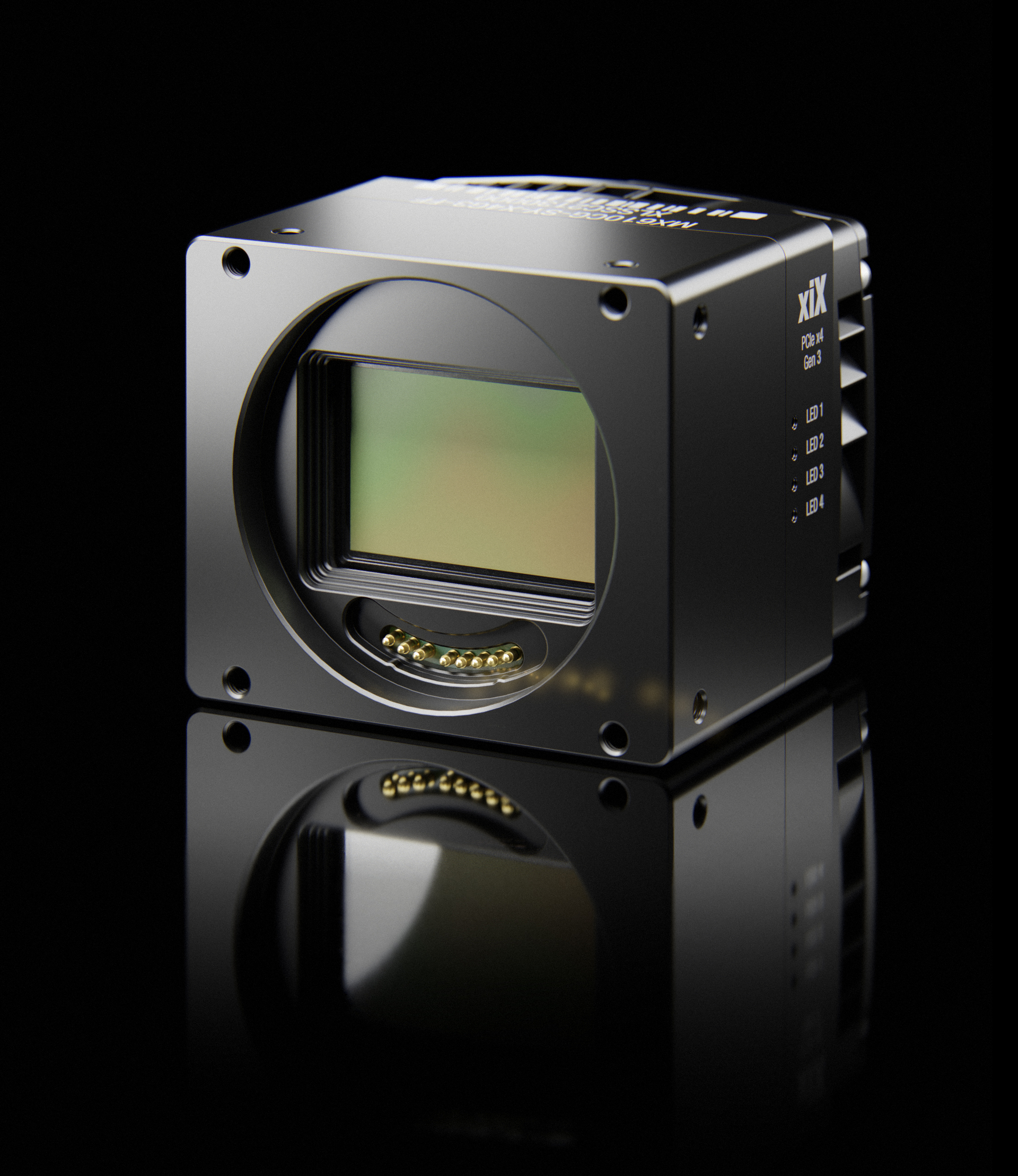
XIMEA MX610 61 MP monochrome camera mounted in the Scan2Screen film scanner

The film handling follows a simple philosophy: the material is treated as the irreplaceable original it is. Movements are gentle and smooth, with no jerky motion and no more tension on the film than strictly required.
 

The MX610 is integrated in its detachable sensor-head configuration: the sensor head sits in the optical path while the interface electronics live separately, chiefly to keep a major heat source away from the sensor itself.

The sensor is cooled passively; the camera's backend electronics are cooled by a fan. Illumination and capture are kept in lockstep through the camera's hardware trigger input, so that each exposure lands precisely within its illumination band.

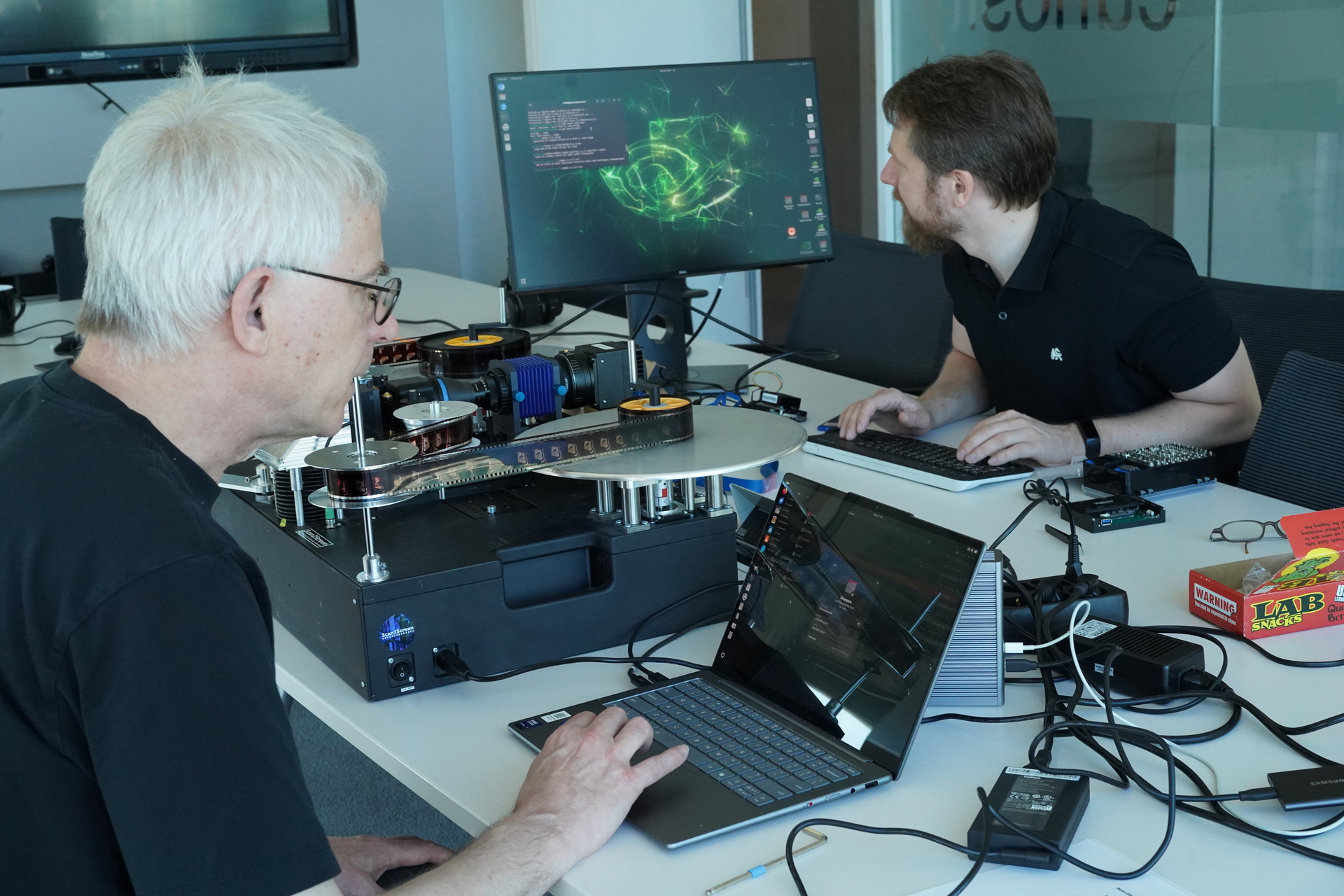
The data pipeline is as portable as the rest of the machine. The camera's PCIe interface connects through a Thunderbolt adapter to a laptop, and a second Thunderbolt connection feeds an SSD RAID array for storage.

The volumes involved make the bandwidth matter: The multispectral raw data for a single frame can be more than a gigabyte and a full film reel quickly runs into many terabytes.

The camera's frame rate is in practice the limiting factor for scanning speed, which is exactly why the high-bandwidth PCIe link was a selection criterion.

Complete portable Scan2Screen system: scanner, laptop and SSD RAID connected via Thunderbolt

Why the old camera had to go

The current camera was not the team's first. The previous generation of the scanner used a CCD-sensor camera. CCD was the standard for scientific imaging for years, but modern CMOS sensors have since overtaken it. Over time, the camera's limits became hard to ignore. Its bit depth was lower than multispectral work really needs. It eventually became obsolete and unsupported. And it ran only under one specific Microsoft Windows environment; nothing else would work, which is a quiet but serious constraint for a versatile instrument. As the project matured, these limitations pushed the team to look for something more suitable and for a partner they could rely on for the long term.
 

Part of what made the XIMEA camera the answer lies in the sensor itself, described in detail below - among other things, the native 16-bit depth the old camera lacked, and the PCIe throughput needed to move fourteen 16-bit captures per frame. Other factors were specific to how the team works:

  • Flexible lens mounting. The ability to swap and adapt the lens/objective mount easily lets the team match the optics to different materials and magnifications without redesigning the instrument around the camera.

  • Clean integration on Linux. The XIMEA software integrates easily into Linux, freeing the system from the single-OS dependency that constrained the previous camera and letting it run on the platform the team actually wants.

  • Software that gets out of the way. Scan2Screen's image-processing and control software is written in-house, and for a sophisticated instrument that is a requirement, not a preference. The camera software must therefore not interfere with the process: any automated internal processing or "enhancement" like automatic gain or gamma correction needs to be excluded, so that the sensor only measures what gets recorded. Just as importantly, the image must not be altered after digitization. The value of the whole workflow rests on capturing raw, faithful, unprocessed measurements that the team's own software then renders based on color science by transparently adhering to a defined and well documented protocol. XIMEA's cameras provide these requirements.

  • Long-term reliability. After the experience of an obsolete camera from a vendor that no longer produced it, continuity became a hard requirement for the new setup. XIMEA has been developing cameras for more than 30 years and provides direct, responsive support - relevant factors for a one-of-a-kind instrument that is expected to stay in service for many years.

At the heart of the scanner: the XIMEA MX610

The detector Scan2Screen selected is the XIMEA's MX610MR-SY-X4G3-FF, a member of XIMEA's xiX-XL family of large-format, high-resolution cameras. At its core is the Sony IMX455, a back-side-illuminated (BSI) full-frame CMOS sensor with an effective resolution of about 9568 x 6380 pixels (≈ 61 Mpix) on a 3.76 µm pixel pitch.
 

Several of its properties map directly onto the requirements set out above:

The model name, decoded:
MX610 - the 61-Mpix xiX-XL model
MR - monochrome
SY - Sony sensor
X4G3 - PCIe x4 Gen 3 interface
FF - 35 mm full-frame format.

  • Monochrome, at full resolution. With no Bayer mosaic in the way, every narrowband exposure is captured at the sensor's full native resolution and reflects only the wavelength the LEDs emit - exactly what a multispectral measurement requires.
  • High, even spectral sensitivity. The sensor's spectral response was one of the decisive arguments for it. In a BSI design, light reaches the photodiodes without first passing through the wiring layers that sit in front of the pixels in older sensors, which lifts quantum efficiency (above 80 % at its peak) and keeps the response broad and even across the visible range. In practice the system can gather a usable signal in every band, including those where an LED or a dense film gives little light, without punishingly long exposures.
  • Full frame, 61 Mpix. The large sensor and high pixel count resolve film grain and physical detail and cover a generous field per frame, allowing to capture the whole film width edge-to-edge while still giving restorers room to produce the best digital elements possible.
  • Native 16-bit readout. Sixteen bits give 65,536 tonal levels per band. Combined with the sensor's low read noise and high full-well capacity, that deep, linear sampling preserves the faint gradations that separate one dye from another - the very information the method depends on, and where the previous camera fell short.
  • PCIe x4 Gen 3 interface. It provides the bandwidth behind the data pipeline described above, feeding image data into host or GPU memory with little CPU load. At full 16-bit depth the sensor reads out at about 3.9 fps (~17 fps at reduced depth) - and since the camera's frame rate is what limits scanning speed, interface bandwidth translates directly into throughput.
  • Cooled, for low noise and for the film. A stable sensor temperature keeps dark noise down, and less noise means fewer or shorter exposures: less light and handling for an original that may be decades old and chemically unstable.

In short, the MX610 delivers the three things the method needs most: an unfiltered monochrome view, deep and clean tonal sampling, and the bandwidth for large multi-band data sets - all in one compact, integrable package.

Cooperation, XIMEA style

A multispectral film scanner is not an off-the-shelf product. It is a tightly integrated optical instrument in which illumination, optics, mechanics and detector must be matched to one another, and it keeps evolving after delivery, as film materials and research questions change. A project like this therefore depends less on a single purchasing decision than on an ongoing technical dialogue between the team building the instrument and the company building the camera.

"Mutual exchange and interactive collaboration is the essential philosophy of XIMEA. We see every customer as a partner, and we stay with them before, during and after the job is done.
What matters to us is that the project succeeds, not just that someone buys a camera. With Scan2Screen the team knew exactly what their science demanded; helping fit those pieces together is the part we enjoy most. And the exchange goes both ways: working this closely with a team that puts the camera to work in such a demanding application gave us valuable feedback that fed straight back into refining the product, to the benefit of everyone who uses it. Contributing to the preservation of film heritage made this one especially rewarding."


Jan-Hendrik Budde, Key Account Manager XIMEA
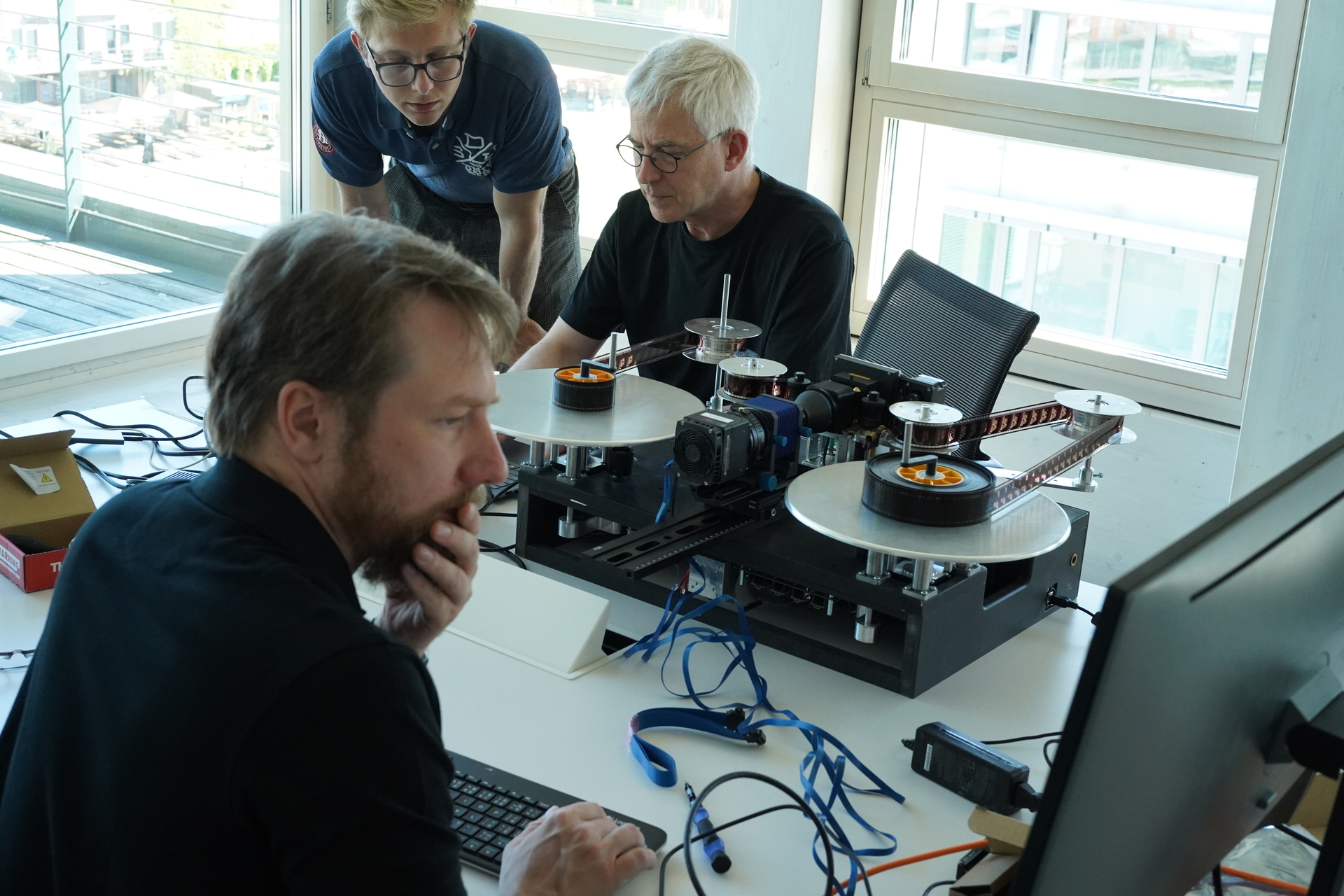
	XIMEA and Scan2Screen teams working on the multispectral scanner
Scan2Screen and XIMEA engineers testing the XIMEA MX610 camera integration

"Finding the perfect camera for our multispectral scanner was quite a daunting task. Most industrial cameras are not developed for aesthetic objects such as historical films but for computer vision, which has different requirements. We needed a monochrome camera with high optical quality, no internal processing, fast data throughput and an API that allows the integration into Scan2Screen’s systems control and rendering software. Beyond the technical requirements we prefer to collaborate with a camera manufacturer that understands our concept and is open to find convincing solutions even for our unusual set-up. XIMEA has convinced us by delivering an excellent product that matches all our needs and with a team that is innovative well beyond the ordinary."

Dr. Barbara Flueckiger, Founder and CEO Scan2Screen US LLC

Measured, not guessed

Key specs

   Aspect

   Detail

Measurement principle

Multispectral transmission scanning; sequential narrowband LED illumination with a monochrome detector

Color capture

Spectral; one monochrome image per illumination band, combined into a per-pixel spectrum

Illumination

Multi-LED light source with optical filters; 7 spectral bands (6 visible + 1 infrared), each captured under direct and diffuse light - 14 captures per frame

Detector

XIMEA MX610MR-SY-X4G3-FF, monochrome, 61 Mpix, Sony IMX455 BSI CMOS

Sensor format

35 mm full frame (≈ 36 × 24 mm active area, 43.3 mm diagonal)

Pixel size

3.76 µm

Bit depth

Native 16-bit readout

Interface

PCIe x4 Gen 3

Sample material

Historical color and monochrome film (tinted/toned nitrate, two- and three-color, chromogenic, hand-colored, etc.) and photographs

Applications

Film archiving and preservation, film restoration, color and material research, cultural-heritage digitization, curation and exhibition

Scan2Screen's scanner reframes the deceptively hard question what color was this film? as a scientific problem rather than a matter of subjective interpretation while still offering ample space for sophisticated curatorial decisions - and the MX610 suits its role in that as much for what it leaves out (no color filter, no interpolation, no three-channel bottleneck) as for what it brings.

The result is what audiences and scholars have responded to in exhibitions and archives: all the colors of film shown not as a modern guess, but as something close to what audiences saw on the cinema screen.

ANNABELLE BUTTERFLY DANCE (USA 1897, William K. L. Dickson; William Heise; Annabelle Moore). Multispectral scan of the hand-painted nitrate print by Scan2Screen, rendered in xenon light. Courtesy of Library of Congress.

Contact

Scan2Screen.com

Scan2Screen Switzerland GmbH
Dr. David Pfluger

Saatlenstrasse 261
CH-8050 Zurich, Switzerland
E-mail: info%at%scan2screen.com

Scan2Screen US LLC
Dr. Barbara Flueckiger

1300 El Camino Real, Suite 100
Menlo Park, CA 94025, United States
E-mail: info%at%scan2screen.org

Related articles

Latest articles