Project Development:
Diamond VBPMs now operate at A, C, D, F3 and G2 beam lines along with Helium luminescence and X-ray scatter based VBPMs.
The Diamond VBPMs use very thin (~50µm) high quality CVD diamond plates placed perpendicularly in the white beam path.
The diamond plates are made by
Applied Diamond Inc.
Under the X-ray excitation the diamond exhibits strong visible light luminescence giving an image of the cross-sectional footprint of the X-ray beam.
The images are captured with a digital camera placed outside the beam line vacuum, looking through a viewport.
The image frames are processed in real time with a custom program.
Camera Substitution
Previously our VBPMs employed USB cameras each connected to computers (the video servers).
These servers carried out the image processing and send data and images via LAN to Operations In addition, the processing program also provides CHESS Operations JPEG images showing the most important information about the beam condition.
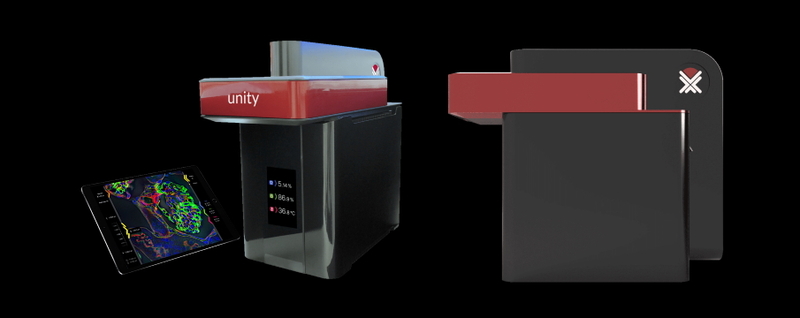
Now we have combined all above mentioned functionality in a single system by using a smart camera that has an embedded operating system thus eliminating the need of a USB connection (which is a limiting factor in camera placement) and separate video server computer.
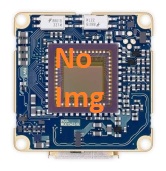
The camera we have chosen is the Currera-R camera by
XIMEA Corp. [4] and it has WES 2009 (Windows Embedded Standard 2009) already inside.
The black-and-white model we use is capable of acquiring up to 200 frames per second.
The first VBPM system with a Currera-R camera has been installed and commissioned at F3 beam line.